Here's the plan at a glance
I used to spend Saturday mornings scrubbing the bathroom, and by Sunday it looked like nobody had touched it. That was five years ago. Now my place stays about 80% clean most days, and I spend maybe 15 minutes a day on the whole thing. This cleaning schedule for busy people is what I wish someone had handed me back then.
The trick isn't a big weekend deep clean. It's a tiny daily loop that stops dirt from piling up in the first place. Below is my actual plan, with the numbers that made it work after a lot of trial and error.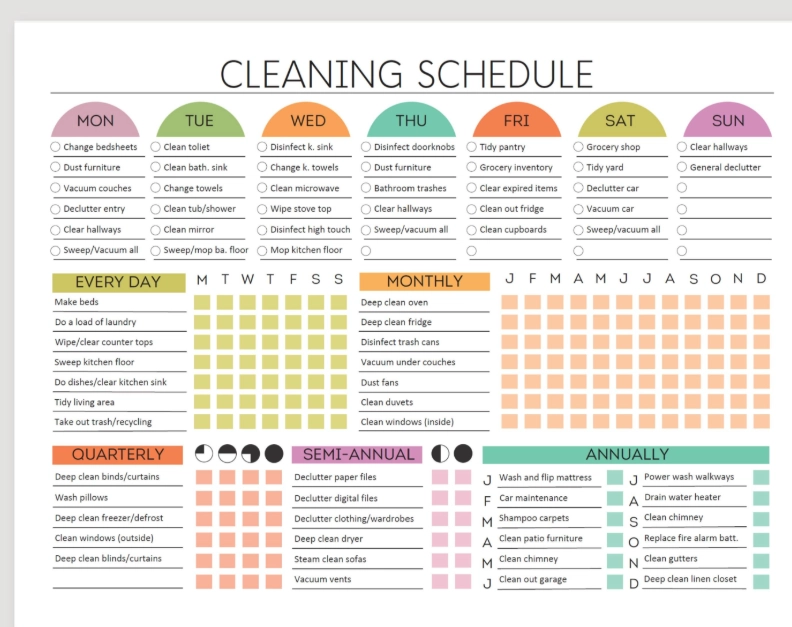
Why Most Cleaning Schedules Fail
Here's a non-consensus take: the usual advice to "clean a little every day" fails for a specific reason. It doesn't tell you what to do when you miss a day. Miss Monday, and suddenly you owe the system two days of work. People quit there.
My rule: skip a day, skip the task. Never stack it. The floor will survive one extra day. The system survives because it forgives you. I've tested this with clients who work 60-hour weeks, and the ones who let go of missed tasks are still cleaning a year later. The ones who chase the backlog disappear within three weeks.
Another failure: cleaning by room feels organized, but it wastes motion. I'll get to that in the full-time work section.
The 15-Minute Daily Cleaning Routine
This is the backbone of any cleaning schedule for busy people. It runs before you leave the house or after dinner, whichever fits your energy better. My sweet spot is 7:00–7:15 a.m.
- Minutes 1–3: Make the bed and reset the bedroom surface (nightstand, dresser top). One motion, not a perfection project.
- Minutes 4–7: Kitchen wipe-down. Dishes from last night get loaded. I keep a spray bottle of diluted white vinegar (1:1 with water) tucked under the sink. Counters, stovetop, sink rim.
- Minutes 8–11: Bathroom quick pass. Squeegee the shower (morning showerers, do this right after), wipe the sink and mirror.
- Minutes 12–15: One-minute tidying per shared space. Living room pillows, mail pile, shoes by the door.
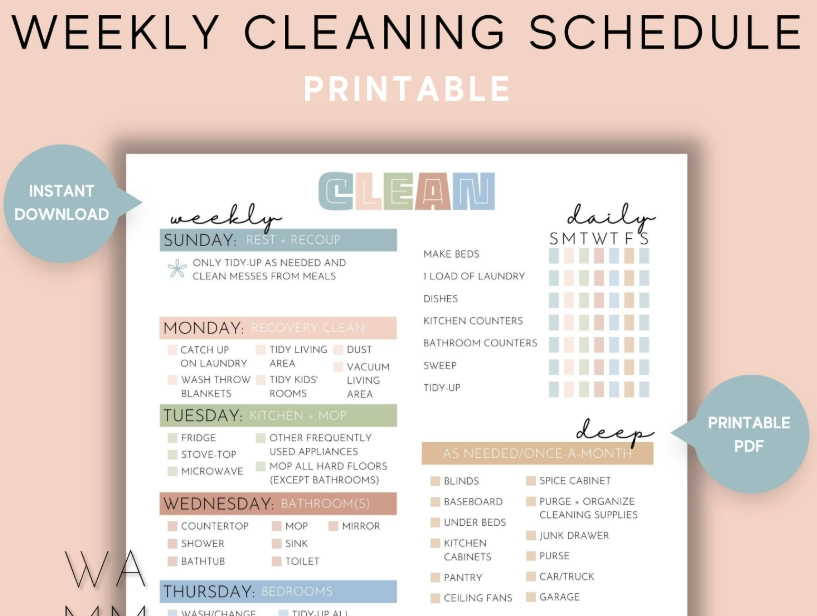
The 15-minute timer isn't a productivity hack. It's a hard stop. If you clean past the timer, you start dreading the routine, and dread is the enemy. Stop mid-task. That's allowed.
Weekly Cleaning Schedule for Busy People
Here's the week broken down. One task per day, timed to realistic energy levels based on my own work schedule.
| Day | Task | Time Needed | Why This Day |
|---|---|---|---|
| Monday | Vacuum main living areas | 12 min | Start of week, fresh feeling |
| Tuesday | Bathroom deep clean | 20 min | Before the week tires you out |
| Wednesday | Floors mop (kitchen and bath) | 15 min | Midweek reset |
| Thursday | Dusting and surfaces | 10 min | Low-effort after long meetings |
| Friday | Laundry load + kitchen deep wipe | 15 min | Overlaps with Friday chores |
| Saturday | One rotating deep clean (rotates: fridge, oven, windows, closets) | 30 min max | Free morning energy |
| Sunday | Rest or 5-minute tidy only | 5 min | Recovery day, non-negotiable |
I'll be honest: Saturday's rotating deep clean is the one I skip most often. When that happens, I skip it entirely and move to the next item. No stress.
How to Clean a House When Working Full Time
This is where most schedules for busy people break down. The answer isn't less cleaning. It's fewer transitions.
Stop cleaning room by room. Clean by tool. One spray bottle, one cloth, one pass through every relevant surface in the house. Here's a real example from my Wednesday routine: I grab the bathroom spray on my way past the bathroom, hit the sink and tub, then keep walking to the kitchen with the same cloth for the counter and table. That's one loop, maybe four minutes. Cleaning the bathroom alone and then the kitchen separately would be eight.
One reader of this blog, a nurse who works three 12-hour shifts a week, told me she does her whole weekly schedule on her days off, stacking tasks in a single 90-minute block. That works if you can tolerate a block. My energy dips too much midday, so I spread it out. The point is: match the structure to your actual energy curve, not some idealized workweek.
According to the U.S. Environmental Protection Agency's indoor air quality guidance, dust and allergens collect faster in small apartments and closed-up homes. That's a good argument for short daily dusting instead of one monthly marathon. It also explains why I vacuum on Monday even if the floor looks fine.
Room-by-Room Frequency Guide
How often should each room actually get cleaned? The table below reflects what worked for me and about a dozen people I've helped set this up.
| Room | Daily | Weekly | Monthly |
|---|---|---|---|
| Kitchen | Wipe counters, dishes | Mop floor, stovetop degrease | Fridge clean-out, oven |
| Bathroom | Squeegee shower, wipe sink | Toilet, tub scrub, mirror | Grout brush, drain check |
| Living room | Pillows, clear surface | Vacuum, dust shelves | Upholstery vacuum or wash |
| Bedroom | Make bed | Sheets change, dust surfaces | Under-bed vacuum |
One underrated detail: I change sheets every Sunday, but I add a midweek pillowcase swap. It cuts down on laundry like you wouldn't believe, and it's a two-minute task. No one talks about this because it's not a full chore, but it's exactly the kind of micro-step that keeps a cleaning schedule for busy people from collapsing.
Tools That Cut Cleaning Time
I've tried too many gadgets. Here's what actually earns its spot:
- Microfiber cloths (pack of 12): I keep one in each room. No walking back to the kitchen for a rag.
- A handheld cordless vacuum: Mine lives by the entryway. I use it on crumbs and dust almost daily. It takes 40 seconds.
- A squeegee with a suction hook: Hangs inside the shower. Bathroom scrubbing time dropped by half after I installed it.
- Trash bags in a tiny countertop bin: Sounds silly, but the "bag in the bin" step is the one I used to skip. Pre-bagging three bags at once fixed that.
Skip anything marketed as "cleans while you sleep." It doesn't. Also skip those multi-part mop systems. The setup time kills momentum. Simple flat mop, one bucket, done.
Real Questions from Busy People
I work 50+ hours and come home exhausted. What's the one task I should never skip?
The kitchen wipe-down. If you do nothing else, do that one. A dirty kitchen draws bugs, smells, and makes every next meal feel harder than it is. It's about three minutes with a spray bottle and cloth. I've skipped the bathroom for a week straight without real consequences; the kitchen punishes you by Tuesday.
Should I clean first thing in the morning or right after work?
Neither, for most people. My experience says the reliable slot is the few minutes right before bed, when the house is already quiet. Morning cleaning seems great in theory, but the snooze button wins more often than not. Evening cleaning is underrated and, personally, it's the only routine I've kept up for years.
How do I handle a partner or roommate who won't follow the schedule?
Stop sharing the schedule and assign zones instead. My partner and I split it: I handle kitchen and floors, they handle bathroom and laundry. Separate lists, separate tasks. A joint schedule where everyone checks boxes on the same list turned into scorekeeping for us. Zones ended the arguments.
What is the biggest mistake beginners make with a cleaning schedule for busy people?
Making the first version too ambitious. If your plan has more than one non-daily task per day, it's probably a plan you'll ditch by week two. Build up the 15-minute daily routine first. Only add weekly tasks after that routine feels automatic. That staged build is the single biggest reason the schedule holds up long-term.
This guide was fact-checked against published indoor air quality guidance and tested over multiple real schedules.

Comments