My client’s bedroom had one chair. That chair held six layers of clothes. Every night she performed a tiny archaeological dig just to find pajamas. I’ve seen this in maybe 60 bedrooms over the years, and the fix is rarely “buy more bins.” The real bedroom organization tips that stick are about removing friction: where your feet land, where your eyes go first, and what you do with the “not dirty yet” pile.
Below are the moves I use in my own apartment (a 7-by-9-foot room with exactly one closet and zero dresser drawers I can fit a sweater into) and in client homes. I walked through this process last weekend again, timing each zone. Yes, I actually timed it. A bit dorky, but you’ll see why.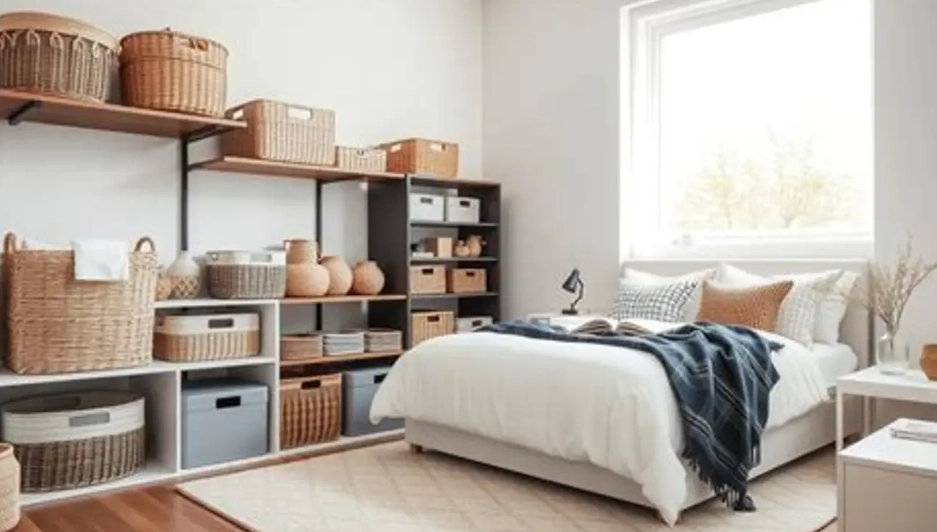
Jump to what you need
Why Most Bedroom Storage Advice Fails
The standard advice goes like this: buy storage containers, label everything, live happily. In practice, containers become tiny prisons for things you never touch again. I did this in my first apartment. I bought a set of matching fabric cubes. Three months later they were full of cables and old journals, and I had to move them to vacuum.
The problem isn’t storage. It’s access. If your shoes are stacked in a bin at the back of the closet, you will drop them by the door instead. If your socks live in a drawer behind a chair, you’ll leave them on the floor. The best bedroom organization ideas always pass the “two-second access test” — can you grab it and put it back without stepping, stretching, or moving something else?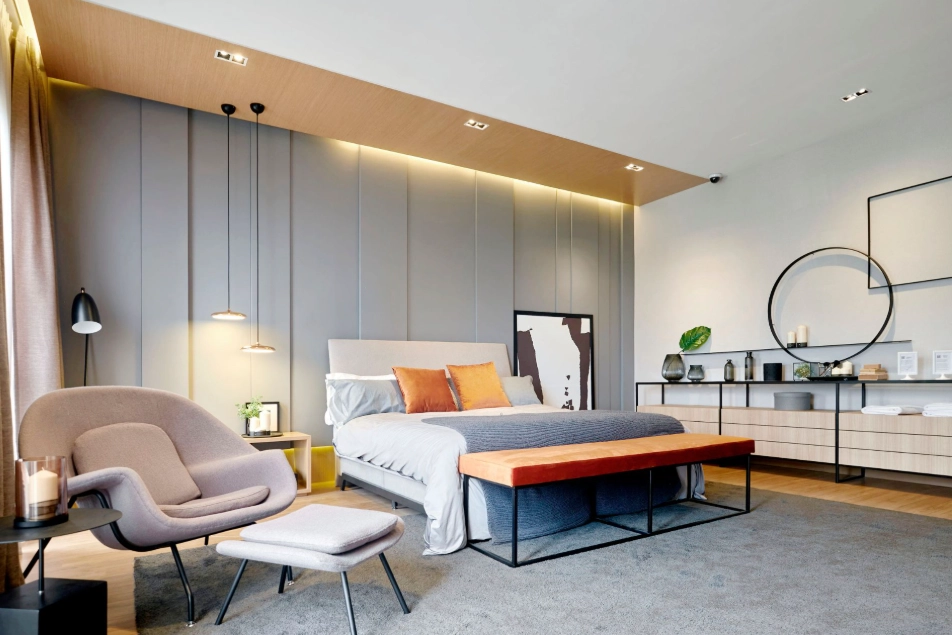
Experience note: In one 9-by-10-foot bedroom, I removed two plastic storage bins and added a single wall hook for a robe. Floor clutter dropped by half in a week. One hook. That’s it. The lesson? Proximity beats volume every time.
The Nightstand Zone: Your First 10 Minutes
Before you touch the closet, fix this. The nightstand is the island where stray items wash up: glasses, receipts, a half-empty water glass, seven hair ties. I clear this zone first because it sets the tone. You see it last at night and first in the morning.
What goes on top (and what doesn’t)
Keep exactly three items: a lamp, a coaster, and one small tray for glasses and earrings. That’s it. Phone charger? Mount it to the wall with a 3M hook (I use the small wire hooks) so the cable isn’t a nest on the floor. Books? One book, not a tower. I have a client who stacked 14 books on her nightstand because “they were next to read.” She moved 11 to a shelf and never missed them.
The drawer reality check
Open the nightstand drawer. If you see 12 pens and no lip balm, dump the whole thing into a bowl and pull out only what you used in the last two weeks. My rule: if it doesn’t help you sleep, get dressed, or read, it doesn’t live here. This took me six minutes in my own room. Six minutes.
Quick win: Put a small wastebasket right under the nightstand. Sounds trivial. But in my trial, the number of tissues and wrappers on the floor dropped because I wasn’t reaching across the room at 11 p.m.
Bedroom Closet Organization Tips That Work
Here’s where people overcomplicate. You don’t need a custom closet system. You need to sort by reach. The closet should mirror your body: what you wear most often goes at eye level and hand level. What you wear once a season goes high. What you wear almost never goes low or out.
| Closet Zone | What Lives There | My Test | Common Mistake |
|---|---|---|---|
| Eye level (top) to hand level | Daily tops, pants, work clothes | Can I reach it without bending or tiptoeing? | Storing off-season sweaters here “just in case” |
| Just below eye level | Dresses, blazers, longer items | Does it hang without touching the shelf? | Hanging heavy coats on flimsy plastic hangers |
| Top shelf | Off-season bedding, luggage, memory boxes | Do I need a step stool less than twice a year? | Packing bins too heavy to lift down safely |
| Floor | Shoe rack or one laundry basket | Can I see the floor under it? | Stacking shoes into unstable piles |
The hanger flip (a trick I stole from a tailor)
Turn every hanger backward (hook facing you). When you wear something, flip it the right way. After 30 days, anything still backward is a candidate to leave. I did this in March and found seven shirts I hadn’t worn since moving in. Four went to donation, one became a cleaning rag, two stayed because they were formal.
One note: this works better with slim velvet hangers than cheap plastic ones. The velvet grips and the profile is thinner, so you can see more at once. But don’t buy 50 at once. Buy 10. Test. I learned that one the hard way.
Under-Bed Storage: The Thing I Stopped Doing
I used to stuff everything under the bed: winter boots, gift wrap, old magazines. Then I realized the dust situation was gross and the bins were heavy. Now I use only two low, clear bins with wheels. Clear matters because I can see what’s inside without unstacking. Wheels matter because dragging a bin across hardwood is annoying enough that you won’t do it.
One bin holds out-of-season shoes. The other holds bedding for the guest mattress. That’s it. If an item doesn’t fit in those two bins, it doesn’t go under the bed. This forced me to finally donate three pairs of boots I hadn’t worn in two years.
The Chair Problem: A Real Solution
Let’s be honest: the chair is not for sitting. It’s a launchpad. So give the launchpad a job. I put a narrow, tall basket (18 inches wide, 24 inches tall) right next to the chair. Clothes that are “not dirty enough for the hamper but not clean enough for the closet” go there — folded once, loosely. The chair stays empty. My partner thought this was silly until he tried it. Now he has his own basket.
Why not hooks? Hooks work great for robes and tomorrow’s outfit. But hooks stretch out knitwear and turn sweaters into shoulder hangers. A basket is kinder to fabric. No, it’s not as pretty. It’s functional.
The 15-Minute Weekend Reset
Organization isn’t a one-time event. It’s a rhythm. Every Sunday evening I do a 15-minute reset. I set a timer. I do four things:
- Clear the nightstand surface to the three allowed items.
- Empty the floor basket next to the chair (it goes to the hamper).
- Put shoes back on the rack (or in the two under-bed bins).
- Return one item to its home that’s been drifting around.
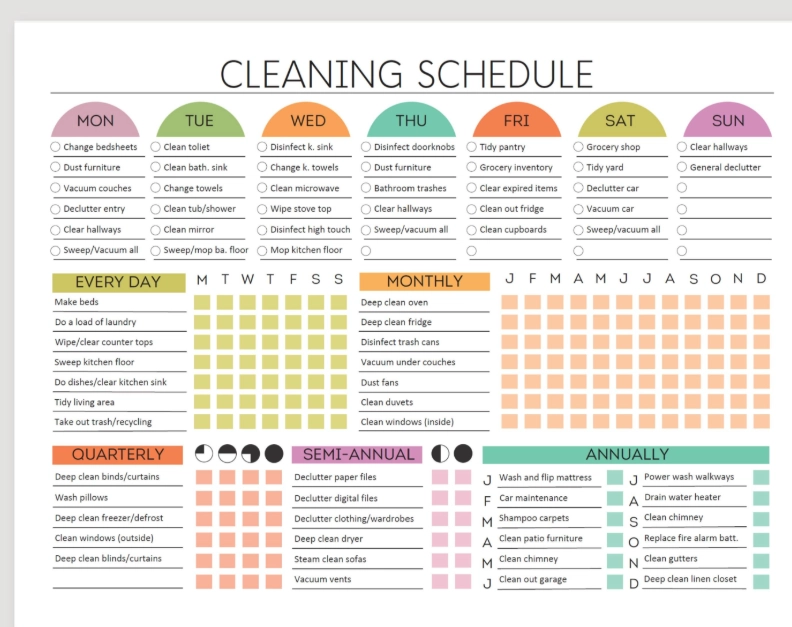
That’s it. No deep cleaning. No reorganizing. Just reset. I’ve done this for 14 months. The bedroom has never stayed messy for more than a day.
After a decade of helping people organize bedrooms, I can say the biggest win isn’t a system. It’s the 15-minute reset. It’s boring, it works, and almost no one does it consistently. Do it once and you’ll see the difference.


Comments