On the evening of November 2nd, several varieties showed strong increases.
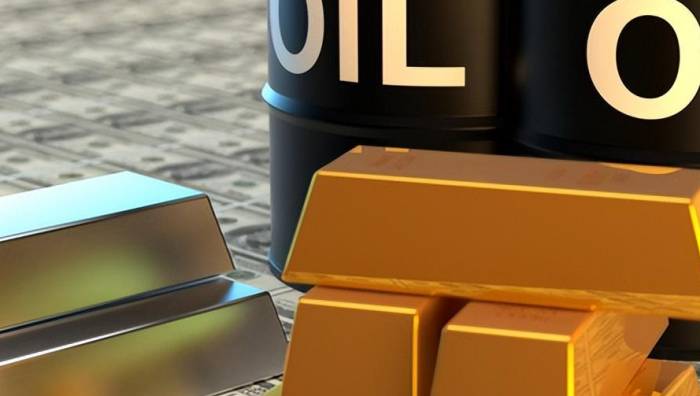
Crude oil began to show signs of stabilization, with rapid price increases during the day. At the price of $80, it is not considered high given the reduction in Saudi crude oil production. Coking coal, iron ore, and other black varieties continue to maintain strength. Some varieties have begun to show signs of upward breakthroughs, such as glass and fats and oils.
Looking at the Wenhua Commodity Index, although there are signs of stabilization, with three consecutive lower shadows and an increase in positions today, there is indeed a possibility of a technical shift to a bullish trend. However, the actual increase today is not significant, and the differentiation among commodities is very severe. Some varieties are still performing weakly, especially those closely related to the global macro, such as cotton and crude oil, which have not shown particularly strong upward trends.
But at the current price, we have to worry, is the commodity market really shifting to a systematic bullish trend?
1. Interest rate cut expectations rise
In recent days, the recovery in commodity prices is mainly due to the warming of interest rate cut expectations. The Federal Reserve's pause in interest rate hikes, Europe's pause in interest rate hikes, and the U.S. Treasury issuance plan being lower than expected have led to a rapid decline in U.S. Treasury interest rates in the short term. In just 1-2 days, the yield on the 10-year U.S. Treasury bond fell from 4.93% to a low of around 4.63%, a direct decrease of 30 basis points.
On the other hand, some of the latest economic data released by the United States also show some new changes. For example, the unemployment rate and wages have started to decline, the number of employed people has decreased more than expected, PMI has turned weak again, and the number of initial jobless claims in the United States for the week ending October 28 was 217,000 people, exceeding the expected 210,000. All these indicate the prospect of a decline in future inflation. However, job vacancies still exceed market expectations, reflecting the resilience of the U.S. economy and an increased expectation of a soft landing.
Therefore, under the expectation of a soft landing, the decline in interest rates will inevitably bring optimistic expectations for the recovery of future demand. At the same time, the decline in interest rates will lead to a decline in the U.S. dollar index, which has a driving effect on commodity prices priced in U.S. dollars, thus generating bullish forces.
When commodity prices rise to a certain extent, the increase in commodity prices will once again put pressure on inflation, and interest rates will rise again, forcing commodity prices to fall. This is the inflation + interest rate spiral we mentioned in our previous articles under the soft landing scenario, which is also the logic behind the changes in commodity prices over the past period. Similarly, if the demand side weakens, the current price support is relatively strong, making it difficult to fall, and it may fluctuate, while some stronger varieties may go bullish.
2. How is the macro demand situation?The current strength of the bullish forces is driven by the expectations of a decline in U.S. Treasury bond yields, while the bearish interest rate scenario is the actual effect of U.S. interest rates on the economy.
A recent sign in the United States is that beef prices have started to plummet, which is a very negative signal. Even during the Silicon Valley Bank crisis, beef futures prices only fell symbolically.
Beef is a basic commodity, which is relatively less affected by macro expectations and more influenced by current demand and supply. However, this time it is not due to supply reasons. The U.S. Department of Agriculture maintained its forecast in the September livestock report that beef production is expected to decrease by 180 million pounds from August to the end of the year, indicating a tight supply.
The continuous surge in U.S. beef prices in recent years is partly due to inflation, which has led to a rapid increase in costs at every stage of beef production, transportation, packaging, and sales. On the other hand, due to long-term droughts in major cattle-raising states such as Texas and Kansas, the U.S. cattle herd has been reduced to "the lowest number in decades."
With little change in supply, the current decline in beef prices is caused by the demand side. The latest "Livestock, Dairy, and Poultry Outlook" report released by the U.S. Department of Agriculture states that since early September, packers' profit margins have been declining because the price of boxed beef has fallen, while the price of feeder cattle has remained relatively flat.
For demand, we focus on changes in wages and the liability side. This is because wages are on the income side, and if income does not cover expenses, spending will decrease.
The latest ADP report shows that in October, wages grew by 5.7% year-on-year, which is the lowest growth rate since October 2021. The wage growth rate for those changing jobs was 8.4%, the smallest increase since July 2021.
The latest data from the U.S. Department of Commerce shows that private worker wages plummeted from 4.5% to 3.9%, the lowest level since February 2021. However, government worker wages grew by 7.8% year-on-year, accelerating further from 7.4% in August, approaching the historical high of 8.7% in October 2021.
Spending accelerated on a quarter-over-quarter basis, while personal income slowed down quarter-over-quarter, leading to a further decline in the personal savings rate, from 4.0% to 3.4%. The personal savings rate has declined for four consecutive months, returning to near historical lows.
Under the interest rate hike, the U.S. GDP grew by 4.9% in the third quarter, which is already a very outstanding performance. It is hard to imagine such a situation continuing under high interest rates. Although interest rates have declined, the impact of interest rates on demand is lagging. Demand in the coming months is determined by interest rates from the previous months, not the current ones. Interest rates can only change expectations in the short term.So, the global total demand in the fourth quarter still tends to weaken, unless the United States ends quantitative tightening.
3. The market is waiting
Although demand is declining, it seems that the momentum to continue downward is insufficient at present.
If we set aside the excessively pessimistic expectations after the Silicon Valley Bank crisis in the first half of the year, as well as the price changes brought about by excessively optimistic expectations after China's policy stimulus in August, we can find that the current bulk prices are on the central line of the whole year.
Under high interest rates, the upper limit of demand is restricted, but there is still a lack of events like the Silicon Valley Bank crisis to break people's expectations to continue downward. Therefore, short-term bulk commodities may fluctuate, waiting for the next signal to indicate the direction. At present, it is not enough, some varieties with a stronger basic plate may strengthen, while some varieties with a weaker basic plate may consolidate horizontally.
Future signals that may indicate a decline in demand include a sharp decline in expenditure data, a rapid rise in unemployment rate, a significant reduction in job vacancies, and a continuous decline in asset prices, etc. Before these signals appear, the market may have to wait, and the structural market may be the main line.