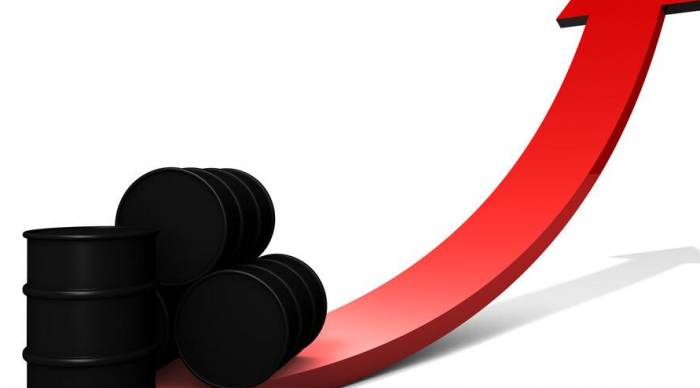
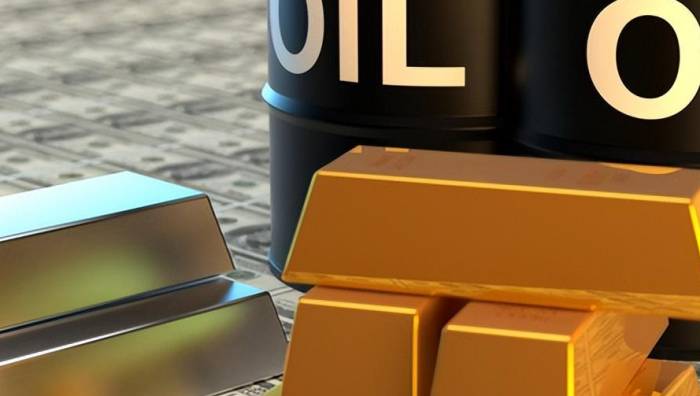
On September 5th, there were some initial signs of a downturn in commodity prices, but unexpectedly, crude oil prices suddenly surged at 9 PM, with a large bullish candle shooting straight up.
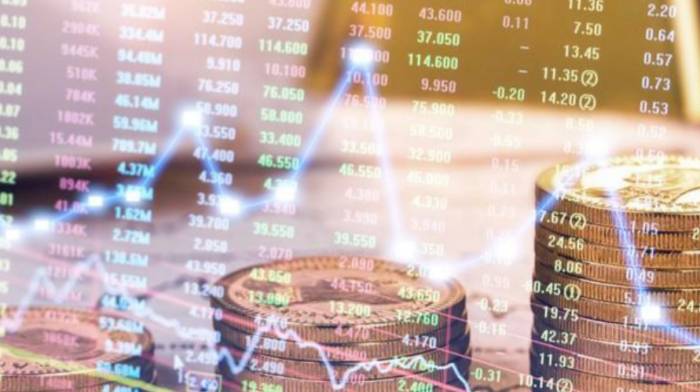
The US Dollar Index rose sharply, reaching a session high of 104.84 at one point, setting a new session high since May 31st; non-US currencies plunged, with the Australian Dollar to US Dollar exchange rate plummeting by more than 1.4% at one point, the Euro to US Dollar fell by more than 0.7%, the British Pound to US Dollar dropped by 0.56%, and the Japanese Yen to US Dollar plummeted by 0.7%, reaching a new low since November 7th last year; the offshore Renminbi to US Dollar exchange rate also broke through the 7.31 threshold at one point during the day.
The reason is also quite straightforward: Saudi Arabia suddenly announced an extension of production cuts by 3 months before the market opened, and Russia also issued a statement that it would extend restrictions on reducing exports.
The reasons for the recent surge in crude oil prices are, on one hand, the expectation of a soft landing replacing the expectation of recession, with improving demand expectations, and on the other hand, the production cuts led by Saudi Arabia within OPEC+ offset the increased crude oil supply from the United States, Nigeria, and Iran.
With the US strategic reserves at their lowest level since 1983 and the production capacity of Iran and the United States gradually reaching a bottleneck, Saudi Arabia's production cuts have put severe pressure on commodity prices.
Earlier on September 5th, there was a pullback in crude oil prices, mainly due to the continuous rise in the yield of the ten-year US Treasury bonds, which suppressed the prices of commodities. However, it is clear that the current demand-side expectations cannot yet counteract the impact of supply-side contractions.
The main contradiction in commodity prices at present is the supply contradiction. If commodity prices continue to rise, it will inevitably bring about tremendous inflationary pressure, which in turn will suppress the space for commodity price increases through rising interest rates. Unless the expectation of a soft landing shifts to a recession expectation, the bullish trend in commodities is unlikely to be completely reversed, and the main contradiction will shift back to demand.
Nowadays, although the unemployment rate in the United States has risen, and the economy has shown some signs of weakening, and the European economy has also shown some signs of weakening, compared with the factors on the supply side, they are still not enough to change the main direction of the contradiction.
This means that the market's expectation that the Federal Reserve's interest rate hike cycle will end may be problematic. If the current trend of rising commodity prices continues, inflation in the United States will not come down without interest rate hikes.
It should be noted that the current inflation in the United States is mainly composed of two parts, with asset price inflation at the core. During the pandemic, US real estate prices soared, and the US stock market also soared, with a cumulative increase of 40 percentage points to date. Inflation is still far below this level, which leads to a high pressure and stickiness of inflation in the United States. Coupled with the rise in commodity prices, inflation will once again become a focus of the market in the coming months.A Federal Reserve governor believes that even if interest rates are raised again, it will not cause significant harm to the job market nor is it likely to lead the United States into a recession. I can only say that this is overly optimistic. His reasoning is that the current demand for hiring remains high. However, I have never seen an economy that has been in a high-interest-rate environment for an extended period and can still be so confident.
The reason why the U.S. interest rate hikes have not led to a recession is mainly due to the interest rate lock-in effect, which causes the actual interest rates for American residents to rise more slowly. Additionally, foreign capital attracted by the rate hikes has supported asset prices, and the high spending by the U.S. government is also supporting the U.S. economy.
In my personal view, the U.S. recession is merely postponed, not averted. Given the current situation, the expansion of the U.S. government's fiscal deficit and the issuance of more debt will increase under high interest rates.
The best way to solve inflation is to create unemployment. The desire to reduce inflation without causing economic problems is, in the context of U.S.-China confrontation, perhaps just a wishful thinking.
The logical loop is as follows: Money over-issuance → Asset price inflation → Interest rate hikes → Increased cost of consumption and investment → Debt service cost growth exceeds debt growth → Debt crisis → Recession → Sharp drop in asset prices → Asset inflation subsides → Interest rate reduction cycle → Economic recovery.
Without the step of asset price decline, the pressure of asset price inflation will always exist, and interest rates cannot be reduced. The impact of high interest rates on the economy will take effect over time.
Now, the rise in crude oil prices is about to accelerate this process, as the higher the prices, the greater the inflationary pressure, and the higher the interest rates, the stronger the destructive power on the economy.
In the fourth quarter, as excess savings are depleted, the U.S. economy may accelerate downward, which will then put pressure on global asset prices. Historically, the arrival of a recession has always been sudden, and before that, most people believed in a soft landing.
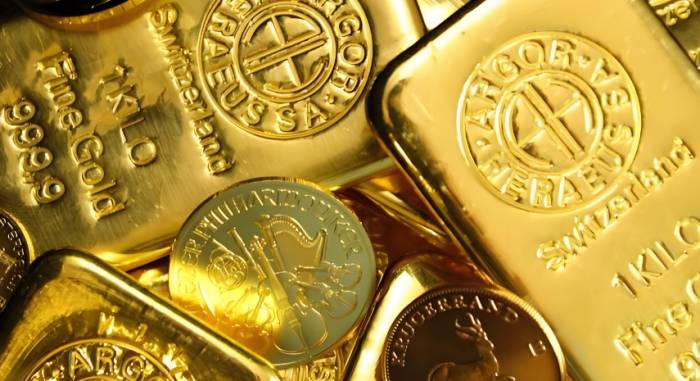
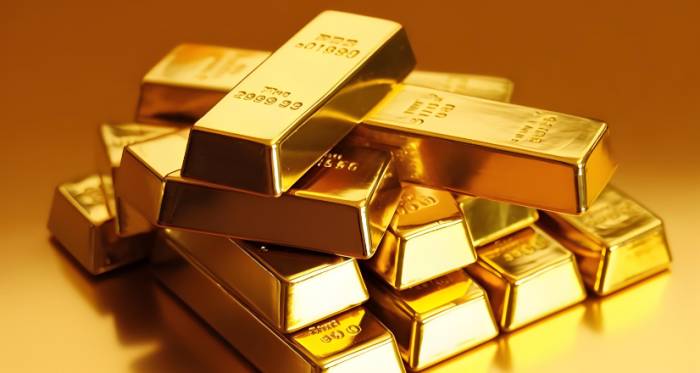
Fasten your seat belts and allocate some gold assets. Although in the short term it will definitely be under pressure from rising interest rates, whether there is a recession or not, it is beneficial for gold. In a recession scenario, the demand for safe-haven assets and expectations for interest rate cuts will quickly rise. In a non-recession scenario, the U.S. fiscal deficit requires the Federal Reserve to print money to support government spending.