1
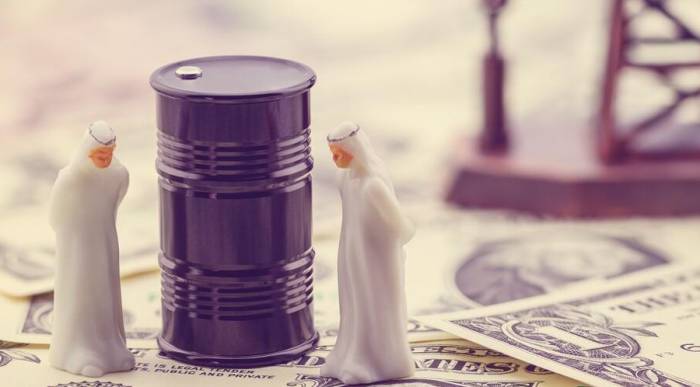
Petroleum dollars are entering their twilight years and may exit the historical stage within the next decade. This is not a sensational claim or an attempt to shock, but a fact that is currently unfolding.
Over the past 40 years, the dominance of petroleum dollars has been based on the following foundation: the United States, as the world's largest oil importer, along with Europe, Japan, and South Korea, imported crude oil from Middle Eastern countries, paying in US dollars.
After receiving US dollars, Middle Eastern countries could not spend them all themselves. Besides purchasing American weapons (for security protection), they invested their surplus dollars in US Treasury bonds and funds to earn some fixed returns.
Middle Eastern countries received security protection and fixed investment returns, while the United States gained the global oil pricing power to seek excessive profits. This is the core foundation of the petroleum dollar hegemony.
2
However, the core foundation of the petroleum dollar hegemony no longer exists.
Firstly, the United States is no longer the world's largest oil importer but has become the world's largest oil producer. In the past, the United States required Europe, Japan, and South Korea to purchase oil and natural gas from the Middle East, sending orders to the Arab princes; now, the United States is asking Europe, Japan, and South Korea to buy its own shale oil and shale gas, competing with the Arab princes. The scale of dollars paid by Europe, the United States, Japan, and South Korea to Middle Eastern countries is decreasing.
Secondly, Middle Eastern countries, holding surplus dollars, used to think that investing in US Treasury bonds for fixed returns was sufficient. But now, with the yield on US Treasury bonds becoming increasingly lower (below inflation), and Middle Eastern countries no longer wanting to rely solely on selling crude oil for survival, they are increasingly unwilling to invest in US Treasury bonds.Middle Eastern countries also aspire to upgrade their industries, venturing into the manufacturing of upstream oil equipment, the international oil transportation and financial services in the midstream, and the refining of oil and production of chemical products downstream.
Even more, Middle Eastern countries wish to leverage the abundant sunlight in their desert regions to develop the solar power industry and the big data storage sector (data storage requires a significant amount of electricity).
These industrial upgrade strategies of Middle Eastern countries not only challenge the dominance of European and American multinational corporations (currently, the equipment for oil extraction and downstream oil refining in Middle Eastern countries are largely monopolized by European and American companies such as ExxonMobil, Shell, and BASF), but they also pose a risk of massive selling of U.S. Treasury bonds (Middle Eastern countries intend to withdraw funds invested in U.S. Treasury bonds for domestic industrial upgrades).
Therefore, the Western world, centered around the United States, will certainly not support the strategies of Middle Eastern countries.
This implies that oil-producing countries in the Middle East and the United States, once partners, have become competitors; the "petrodollar" system, a product of their cooperation, has lost the core support and its decline is inevitable.
Moreover, Middle Eastern countries have found new partners, namely China.
Currently, we have replaced the United States to become the world's largest oil importer and the biggest financial backer for Middle Eastern oil-producing countries. Whether it is Saudi Arabia or the United Arab Emirates, a quarter of their exported oil is shipped to ports in Guangzhou or Shanghai.
Since we have become the largest financial backer for various Middle Eastern countries, it is not unreasonable for us to request that a portion of the oil be settled in Renminbi.
In fact, through the recent China-Arab Summit, we have reached a preliminary agreement with Middle Eastern countries that in the next 3-5 years, through the Shanghai Petroleum and Natural Gas Trading Platform, we will vigorously promote the settlement of Middle Eastern oil in Renminbi.Of course, when we request that a portion of Middle Eastern oil be settled in Renminbi, we naturally expect something in return, as is the custom of reciprocity. In addition to continuing to place massive orders with Middle Eastern countries, we also support their plans for industrial upgrading.
Middle Eastern countries wish to enter the entire petroleum industry chain (including oil equipment manufacturing, oil transportation, oil refining, etc.), and they want to develop new energy and big data computing centers. What they lack is not money, but rather technology and experience. These are our strengths, and we can help Middle Eastern countries.
After all, by cooperating with Middle Eastern countries to take a share of the market monopolized by (some) European and American multinational oil companies and chemical giants, we can all get a slice of the cake. Why not do it?
Moreover, we have the "petro-yuan" this super big cake, waiting to be shared.
In summary: The current Middle Eastern countries and the United States have changed from cooperative partners to competitors; while China and other countries have changed from ordinary business partners to strategic partners.
Under this trend, the petrodollar is gradually entering twilight, and the petro-yuan is rising, which is a historical law and market-driven, and there will inevitably be a day when it is realized.
More importantly: Not only do Middle Eastern countries, which account for 40% of the world's oil reserves, have the intention to try the petro-yuan; Russia, Iran, Venezuela and other countries, which also account for 40% of the world's oil reserves, have already begun to use the yuan to settle oil on a large scale.
Countries that account for 80% of the world's oil reserves are trying to settle oil with the yuan. As long as we do not have major problems ourselves, the rise of the petro-yuan is a matter of course.
Just as a Chinese saying goes: Water flows thousands of miles and three thousand mountains, and eventually rushes into the East China Sea.