On Friday, the overseas market staged a spectacular reversal.
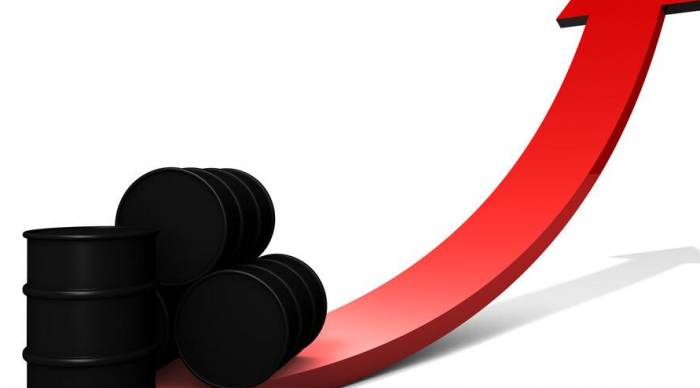
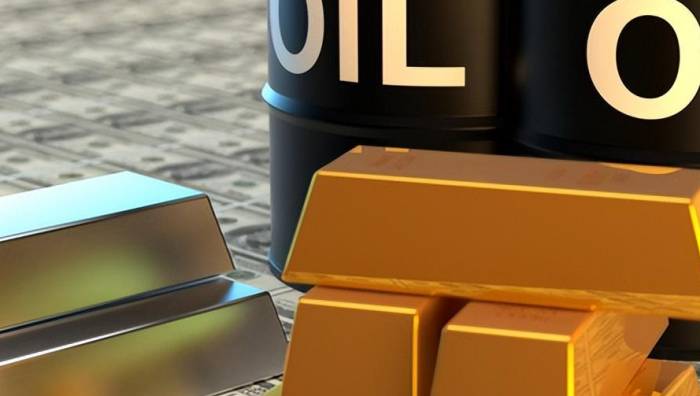
WTI crude oil futures first plummeted by nearly 3%, then performed an astonishing turnaround, closing with a surge of over 2%, with a single-day fluctuation as high as 5%.
The reason for the plummet was a Wall Street Journal report that the UAE, an OPEC member, intended to exit the OPEC organization. US officials claimed that the UAE privately indicated they would follow the US's lead and increase production, but Saudi Arabia disagreed. Consequently, when the news broke, international crude oil prices experienced a significant drop.
However, it turned out to be a false alarm. Subsequent reports from Reuters refuted the rumors of the UAE leaving OPEC, and then crude oil began to recover lost ground. But unexpectedly, this was just the beginning; the oil continued to rise until it surged by 2%.
The reason for this surge was the US ten-year Treasury bond yield falling below 4%, with expectations for interest rate hikes cooling down, and at the same time, US stocks also saw a significant increase on Friday evening. Investors began to reflect on whether the Federal Reserve's interest rate path would continue to be pessimistic. The market's performance reflected expectations for future Federal Reserve monetary policy or a correction of the Fed's hawkish stance.
On March 3rd, the Federal Reserve Board released its semi-annual Monetary Policy Report, once again emphasizing its firm commitment to controlling inflation at a 2% target and considering continued interest rate hikes necessary. They believe that to bring inflation back to the 2% level, it may be necessary to experience a period of economic growth below trend levels and a cooling of the labor market.
This is somewhat similar to what we mentioned in previous articles. Because during the pandemic, the US stimulated the economy through debt, and now it needs to swing to the other extreme to restore market equilibrium. The reason inflation has been slow to decrease is precisely because demand has exceeded supply; expenditure must be reduced to further lower wage levels. Once interest rates are lowered, the dollar will depreciate.
However, the semi-annual report did not show a more hawkish stance, which in itself allowed the market to breathe a sigh of relief, and it was natural for a rebound to occur. Currently, many in the market are pinning their hopes on the Federal Reserve to bring about a major bull market, similar to what happened in 2019, after ending tightening policies.
Another voice is emerging in the market: due to the peak in oil futures prices in February-March of last year, which was also the stage when inflation was reaching its peak, the high base effect may lead to a faster decline in market inflation data in the coming months, thereby easing inflationary pressures.
Looking at the composition of the US CPI from January, the impact of energy items on inflation will indeed decrease, but we can see that over the past few months, the contribution of services to inflation has been rising, especially in real estate.It should be noted that over the past three years in the United States, real estate prices have risen by 40%, yet the increase in rent has been lagging. The U.S. residential rent price index has climbed from 338 to the latest figure of 388, marking a 14.79% increase, which is significantly behind the surge in housing prices. In the future, the rise in rent and the subsequent increase in service costs may replace energy as the most critical factor in stimulating U.S. inflation.
When the market and economy have, for an extended period, accepted the medicinal treatment of low interest rates and quantitative easing and have become addicted to it, the first thought during any difficult times is to lower interest rates. However, whether this wish comes true depends on inflation.
With interest rates currently so high, it is only a matter of time before U.S. inflation declines. But the price the U.S. has to pay is different, and there is controversy in the market about this.
Optimists believe that inflation will drop quickly, and the Federal Reserve will soon end its rate hikes, allowing the U.S. economy to return to normal.
Pessimists argue that inflation will be difficult to reduce in the short term, and the high point of interest rates may be even higher. For instance, Dr. Doom Nouriel Roubini believes that the Federal Reserve needs to raise the benchmark interest rate to a level far above 6% to achieve a 2% inflation target, and that the U.S. is on the verge of facing a stagflationary debt crisis that combines the stagnation of the 1970s with the financial crisis of 2008.
What we need to pay attention to is that there are many extreme situations now, such as U.S. inflation never reaching above 8% since 1980, and the U.S. unemployment rate is at its lowest point in nearly 40 years. If we simply use the experience of the past decade to judge, it is clear that the historical perspective is too narrow.
What we need to focus on is why the Federal Reserve's interest rate hikes this time have not been as effective as before in reducing inflation as expected. This is the core issue that the market should be concerned about.
Reducing inflation is nothing more than reducing demand or achieving low-cost supply. The dollar's interest rate hikes, on the one hand, appreciate the dollar, reducing the pressure of imported inflation, and on the other hand, suppress market demand, which will gradually reduce inflation. Because this time, there is too much money, and higher interest rates are needed to withdraw the currency.
For example, after the outbreak of the pandemic, the U.S. government introduced seven rounds of fiscal relief bills, with a total amount of $6.7 trillion. The U.S. federal government's fiscal deficit jumped from $984 billion in 2019 to $3.1 trillion in 2020, and the fiscal deficit as a percentage of GDP rose from 4.6% in 2019 to 15.2% in 2020. At the same time, due to the hollowing out of domestic industries in the United States and high tariffs on China, there is an imbalance of supply and demand. It can be said that the current inflation in the United States is an inevitable product of excessive stimulation and structural imbalance.
I still maintain my view that I have never seen an inflationary bear market with unemployment at a historical low, nor have I ever seen a recession with unemployment at a historical low. As shown in the figure below, every time market interest rates invert, they correspond to a recession.At the current interest rate levels, the longer they persist, the higher the likelihood of brewing a crisis. During the pandemic, emerging countries borrowed a lot of debt at low interest rates. With the dollar flowing back, emerging countries are likely to face a debt crisis, Argentina being a case in point. The United States is no exception; inflation has significantly driven up asset prices. An increase in interest rates would lower asset prices, thereby damaging the balance sheets of households or businesses, leading to a reduction in asset value and an increase in debt pressure. Everyone is waiting for the Federal Reserve to cut interest rates again, just as it has done over the past few decades, to save everyone.
However, the market's anticipated rate cut may just be a pipe dream. This time is different from previous cycles. All inflation is a monetary phenomenon, and no country can create and consume wealth out of thin air. The excessive consumption during the pandemic must be repaid with high-interest U.S. Treasury bonds to return to a state of supply and demand equilibrium.
In three years of the pandemic, technology has not grown; instead, it has added a lot of non-productive expenditures out of thin air, such as COVID-19 testing. The global economy has relied on consuming savings to create a prosperity, with wealth increasing significantly, which is注定 to be unsustainable.